Overview
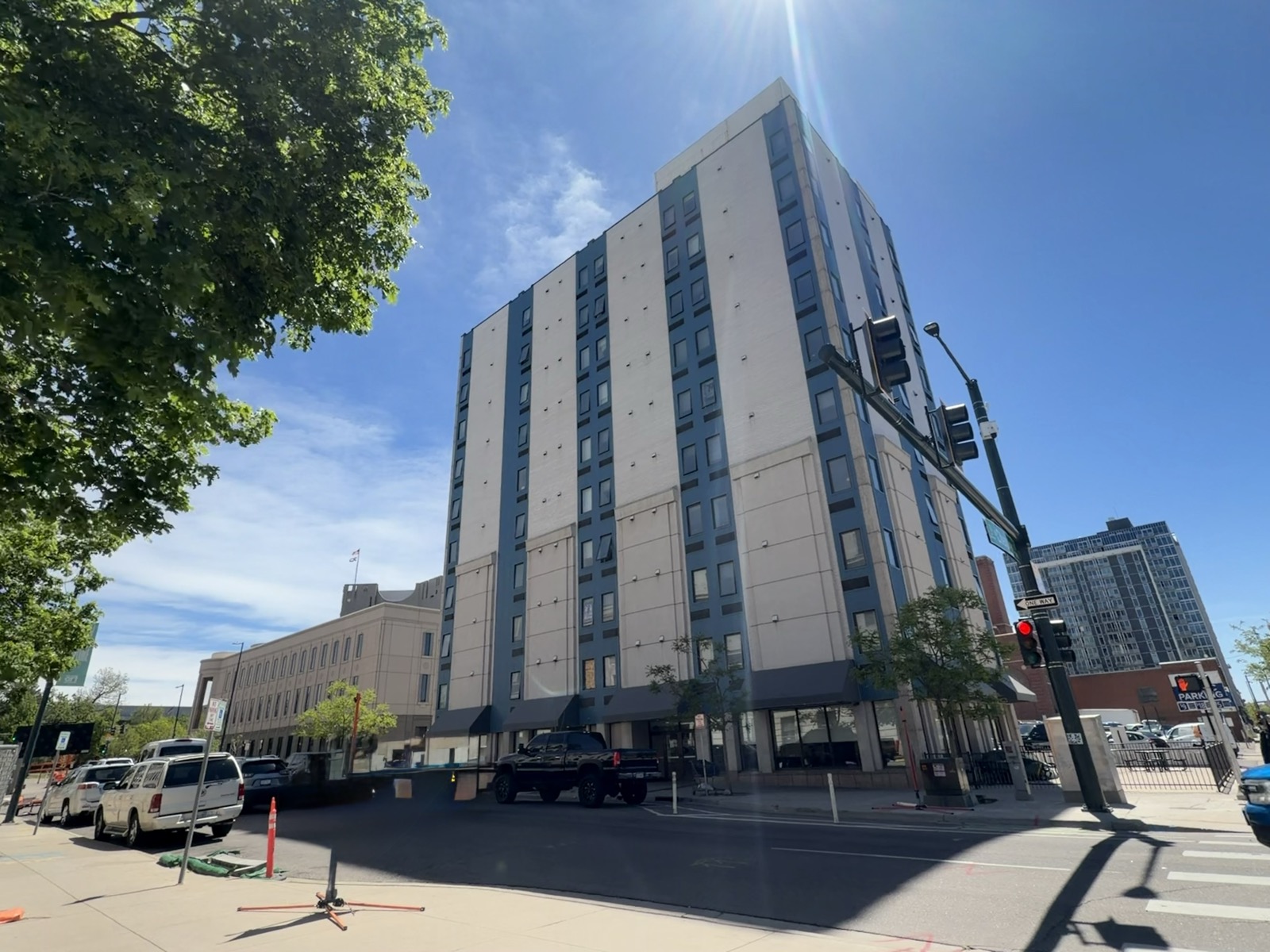
The Forum Apartments is a 100-unit affordable housing community in Denver, Colorado, originally constructed in 1963 and partially renovated in 1997, that underwent a comprehensive electrification retrofit in 2023. Prior to the upgrade, the building relied on district steam-powered hot water generators serving hydronic baseboard heating and domestic hot water, with window and wall-sleeve units providing cooling and limited in-unit ventilation.
|
Project Location |
Denver, CO |
|
Climate Zone |
5 |
|
Year Built |
1963 |
|
Project Size (sf) |
44,250 sf |
|
Levels (#) |
10 |
|
Units (#) |
100 |
|
Buildings (#) |
1 |
The retrofit strategy for the Forum Apartments was primarily driven by the need to disconnect from the district steam loop and address the aging central heating and domestic hot water infrastructure. As the existing steam-powered system neared the end of its useful life and posed increasing risk of failure, the ownership team pursued a planned retrofit to avoid emergency replacement and enable a strategic transition to electrified systems. Housing tax credits combined with state and local gap financing allowed the project to implement a comprehensive mechanical system overhaul.
In addition to infrastructure end-of-life considerations, decisions were driven by requirements for meeting Denver’s Building Performance Standards under the Energize Denver ordinance. Compliance with increasingly stringent energy use intensity (EUI) and greenhouse gas intensity (GHGI) targets made electrification a strategic pathway to long-term regulatory alignment. The retrofit also addressed persistent comfort deficiencies, including corridor overheating and inadequate cooling performance, improving overall building functionality and resident experience.
Retrofit Strategies
Building maintenance staff at the Forum Apartments identified significant performance issues, including inadequate cooling and insufficient ventilation within the corridors. Given the end-of-life condition of the existing piping infrastructure, the project team explored various centralized and distributed approaches to electrification.
In-Unit HVAC Options
Several mechanical system configurations were evaluated for the residential units. Distributed options replace the central heating source with individual in-unit heating and cooling systems, while centralized approaches retain a central heating plant and introduce in-unit cooling to address comfort deficiencies.
-
Distributed Approach
-
Vertical or Packaged Terminal Heat Pump
Ducted VTHP or ductless PTHPs to provide integrated heating, cooling, and outdoor air ventilation to the units. -
Electric Baseboard Heating with Through-Wall AC
Through-wall air conditioner units for cooling, paired with electric resistance baseboard heating in place of existing hydronic baseboards.
-
Vertical or Packaged Terminal Heat Pump
-
Centralized Approach
-
Hydronic Optimization with Through-Wall AC
Install new thermostatic radiator valves with remote thermostats for improved control and efficiency for hydronic baseboards. Cooling to be provided by through-wall AC units.
-
Hydronic Optimization with Through-Wall AC
Common Area HVAC Options
In the common areas, the project team evaluated three options for modernizing the central air handler and its service water heating:
-
Electric
-
Electric Duct Heaters in Fan Coil Unit
Replace the existing hot water duct heating coil with an electric duct heater. -
Split System Heat Pump
Pair the fan coil unit with split system air source heat pump instead of hydronic heat
-
Electric Duct Heaters in Fan Coil Unit
-
Gas
-
Natural Gas Boiler
Install two new condensing natural gas boilers to serve the existing hot water piping.
-
Natural Gas Boiler
To address the cooling issue in corridors, the design team proposed VTAC heat pump units installed within dedicated closets on the south wall of each floor.
Domestic Hot Water
The project team evaluated four replacement strategies spanning all-electric, all-gas, and hybrid configurations, including options that decoupled space heating from DHW. These scenarios considered varying levels of electrification, system centralization, and infrastructure modification.
-
Electric
-
Electric Resistance Boilers
All-electric option replacing the steam system with central electric resistance boilers located in the existing basement mechanical room. Existing DHW distribution piping to remain. -
Heat Pump Water Heaters
All-electric option transitioning to a partially decentralized model by installing high-efficiency heat pump water heaters on each floor.
-
Electric Resistance Boilers
-
Gas
-
Natural Gas Boilers for DHW + Space Heating
All gas option replacing the steam system with central natural gas boilers serving both DHW and mechanical space heating requirements.
-
Natural Gas Boilers for DHW + Space Heating
-
Hybrid
-
Natural Gas Boilers for DHW only
A hybrid approach using central natural gas boilers for domestic hot water only, and shifting space heating to distributed electric systems.
-
Natural Gas Boilers for DHW only
Planning and Design Approach
The project team evaluated several critical factors during the design process, including overall constructability, capital costs, and the balance between full electrification and continued natural gas reliance. A primary driver was the alignment of system types with available funding sources, ensuring the selected strategy was financially feasible and in line with sustainability goals. Because the funding sources for this retrofit incentivized an all-electric design, the team prioritized full electrification when evaluating the above options.
Residential Space Heating and Cooling
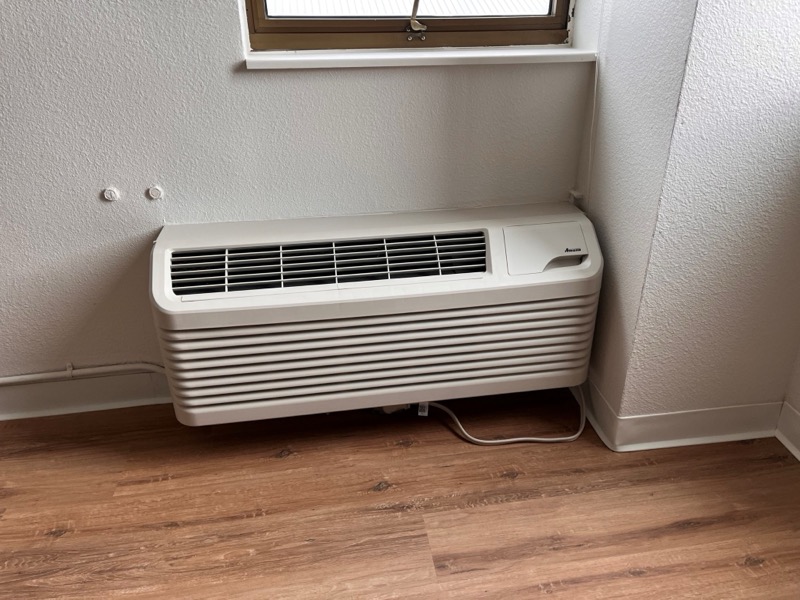
The project team ultimately elected to decommission the central hydronic heating system and install packaged terminal heat pumps to serve each residential unit. By leveraging heat pump technology, these systems provide both space heating and cooling through a single unit at a relatively affordable cost per unit. This consolidated approach eliminated the need for separate heating and cooling systems while reducing the building’s reliance on natural gas. This was also an attractive approach because all the units were studio apartments which are well served by a single PTHP without the need for ducting or multiple terminal units per residential space.
An evaluation of the building’s electrical infrastructure confirmed that the existing service and unit panels could accommodate the new heating loads, allowing electrification to proceed without significant electrical upgrades. This minimized construction complexity and helped maintain overall project cost control.
Domestic Hot Water
To replace the existing steam system, the project team selected central electric resistance boilers to provide DHW. This approach was identified as a cost-effective pathway to full electrification, with a lower initial capital cost than central heat pump water heater systems. Because space heating was transitioned to distributed electric systems, the new boilers are dedicated solely to DHW production.
An assessment of the existing infrastructure indicated that the hydronic and plumbing systems were generally in good condition and required only minor routing modifications. The building’s electrical service had sufficient capacity to accommodate the additional load, although new feeders and distribution equipment were installed to support the upgraded system.
Common Areas
The systems serving the common areas and corridors had long-standing issues with overheating, undercooling, and poor air distribution. In the mechanical rooms and lobby, ductless mini split heat pumps were installed to provide heating and cooling. All common areas or corridors that had hot water cabinet unit heaters served by the old steam system were replaced with electric resistance cabinet heaters. Vertical terminal heat pump units were also installed at each floor to provide heating and cooling as well as ventilation to the corridors. The central air handler was replaced with a new split system heat pump. The new system provided space heating and cooling to the lower floors as well as ventilation to the corridors.
Lessons Learned
-
Separating ventilation systems from heating and cooling equipment is generally more efficient than using integrated systems.
When a single system is responsible for both space conditioning and outdoor air ventilation:
- The equipment must fully condition outdoor air prior to distribution
- Energy consumption increases due to ventilation load treatment
- Equipment may operate outside optimal efficiency ranges
Decoupling ventilation from space conditioning allows for independent control of airflow and temperature, enabling each system to operate according to its specific performance requirements. This separation improves overall equipment efficiency by preventing unnecessary conditioning of outdoor air through heating and cooling equipment. As a result, total electrical consumption can be reduced while maintaining appropriate ventilation and thermal comfort levels. -
Avoid overlapping systems serving the same zone to reduce operational conflicts and energy waste.
At the Forum Apartments, VTAC units were installed to provide heating, cooling, and ventilation to the corridors, while a central split system simultaneously delivered conditioned ventilation to the same spaces. Commissioning identified operational conflicts between the two systems, including instances of simultaneous heating and cooling. This overlap resulted in corridor over-ventilation and unnecessary electricity consumption, reducing overall system efficiency.Best practice considerations include:- Clearly defining zone responsibility during design
- Assigning a single primary system per zone where feasible
- Verifying ventilation rates during commissioning
-
Prioritize controls integration and commissioning
Commissioning after final installation identified several performance deficiencies that would have led to reduced efficiency, reduced system service life, and higher-than-anticipated operating costs. Key issues observed included conflicting heating and cooling calls, excessive equipment runtime, and elevated energy consumption resulting from improper control programming and installation deficiencies.These issues underscore the importance of engaging qualified MEP engineers and independent third-party commissioning agents throughout design and construction. Proper system design, coordinated controls integration, and post-installation performance verification are essential to ensuring systems operate as intended. Prioritizing commissioning and quality assurance helps ensure that electrification retrofits achieve their expected energy savings, comfort improvements, and long-term operational reliability.
Project Team
|
Owner |
|
|
Architect |
|
|
Structural Engineer |
|
|
MEP Engineer |
|
|
Energy Engineer |