Overview
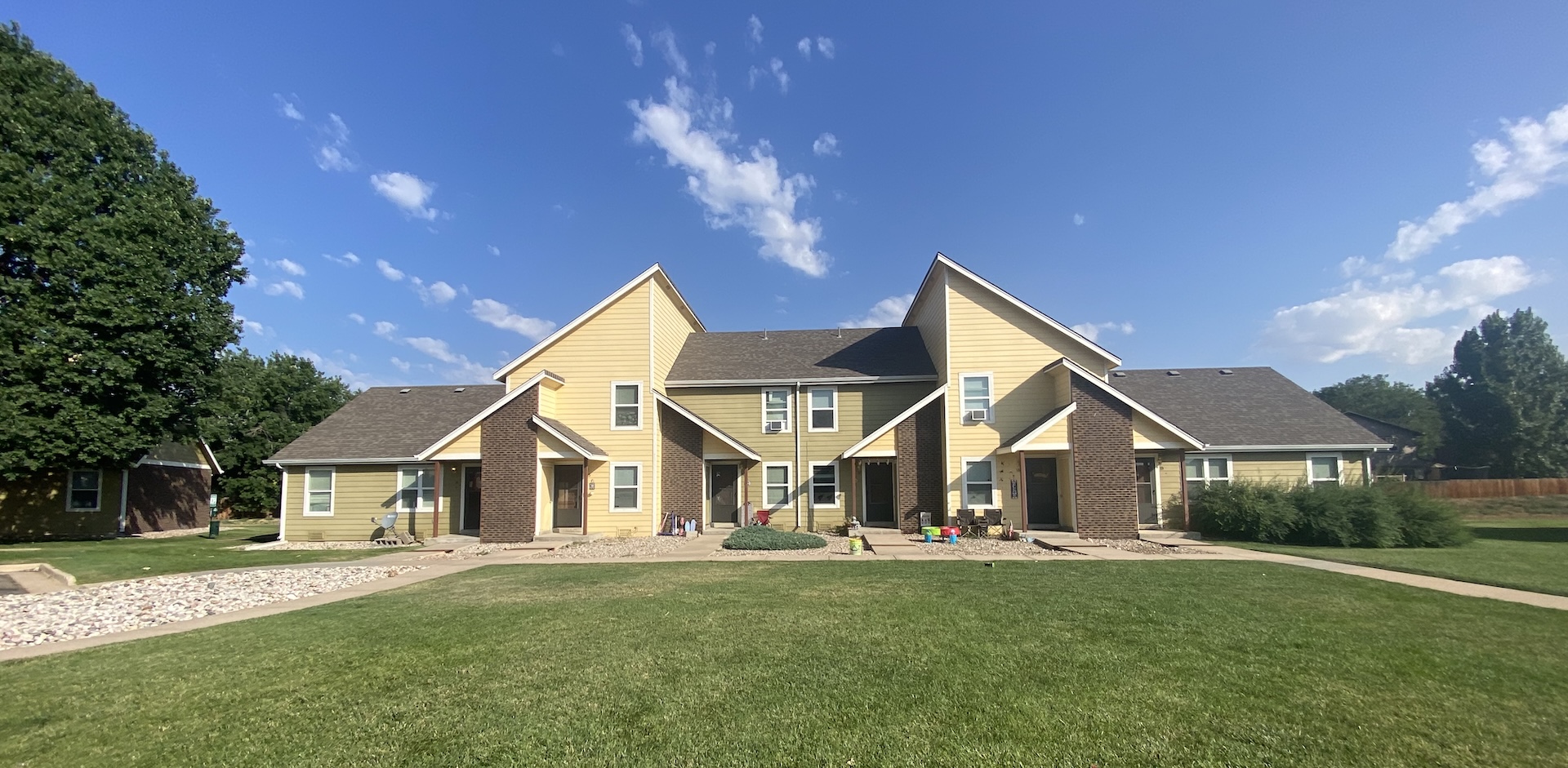
Cottonwood is an affordable housing community located in Windsor, Colorado. Originally constructed in 1984, the development consists of seven buildings housing thirty-seven total townhouse units. Prior to the retrofit, the buildings relied on a dispersed mechanical strategy, with individual natural gas furnaces in each dwelling unit providing forced-air heating. These systems were controlled by non-programmable thermostats and did not provide cooling. Each unit was observed to have at least one window-mounted air conditioning unit installed. Domestic hot water was served by individual electric resistance water heaters located within each unit.
|
Project Location |
Windsor, CO |
|
Climate Zone |
5 |
|
Year Built |
1984 |
|
Project Size (sf) |
30,768 sf |
|
Levels (#) |
2 |
|
Units (#) |
37 |
|
Buildings (#) |
7 |
Electrification Strategies
The electrification strategies considered centered on transitioning the property from natural gas and electric resistance to high-efficiency electric heat pump systems. In addition to a variety of smaller recommended energy efficiency improvements, the primary mechanical upgrades that were evaluated included:
Air Source Heat Pump
Replacing the existing natural gas furnaces with air source heat pumps equipped with natural gas backup heat to provide both heating and cooling. To ensure high performance, the selected heat pumps were required to meet specific efficiency minimums for both heating and cooling, have programmable thermostats installed, and feature at least two-stage operation capability.
Air Source Heat Pump Water Heater
Replacing the existing electric resistance water heaters with air source heat pump water heaters to improve system efficiency. To ensure safety and performance, the new heat pump water heaters were specified to include a balanced thermostatic mixing valve along with the installation of new circulation pumps.
Planning and Design Approach
The project team ultimately moved forward with a cold-climate air-source heat pump conversion for space heating and cooling with a natural gas furnace for backup. This selection was strategically prioritized because the existing natural gas furnaces had reached the end of their useful life and would have required replacement in the near future. This approach enabled the addition of cooling to the units, addressing an existing capital need and eliminating reliance on window-mounted air conditioning units.
The existing crawl space provided plenty of room for the new equipment and allowed for the efficient routing of refrigerant lines to the exterior. Additionally, as Cottonwood consists of townhouse-style units with individual yards, identifying suitable locations for the exterior condensing units presented no significant challenges. In contrast, heat pump water heaters were determined to be less feasible for this site due to significant space constraints within the existing mechanical closets and concerns related to operational noise. Furthermore, the existing electric resistance water heaters were relatively new and functioning as intended, making an immediate upgrade less critical.
Operational costs were a secondary consideration relative to the primary goals of electrification and the provision of tenant cooling. Replacing a natural gas-fired furnace with an electric system rarely yields significant operational cost savings due to the comparatively low cost of natural gas relative to electricity in Colorado. Additionally, transitioning to heat pump water heaters was determined to be less cost-effective when accounting for the remaining useful life of the existing units, the high upfront costs of the new equipment, and the constructability challenges associated with accommodating the larger systems within the existing mechanical rooms.
In addition to the heat pump installation, the design team elected to implement several low-cost energy efficiency measures. Supplemental insulation was added to the attic and penetrations from former through-wall AC units were permanently sealed, improving the building envelope. Existing light fixtures that had not already been upgraded were replaced with high-efficacy LED lighting to improve efficiency. Plumbing fixtures lacking low-flow aerators were replaced with water-saving fixtures to lower energy and domestic water use. Project teams are encouraged to consider similar low-cost efficiency measures to help absorb the higher operational costs associated with electrification.
Pre and Post-retrofit operational data
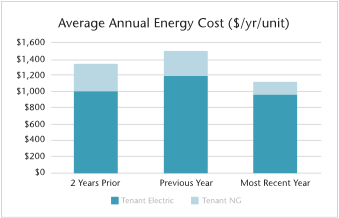
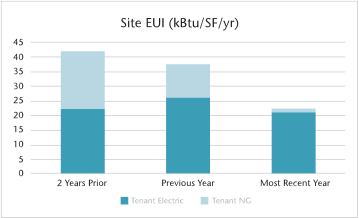
Following twelve months of operation, a utility analysis was conducted to evaluate pre- and post-renovation energy consumption, operational costs, and energy use intensity (EUI). The analysis was performed for a sample of eight units with authorized access to utility data. Overall, both operational costs and EUI decreased. As anticipated, electricity consumption increased modestly, while natural gas consumption declined significantly.
Annual utility costs saw a slight decrease compared to the full year preceding the heat pump installation. While electricity costs remained relatively stable with a 3% decrease, natural gas costs dropped by 57%, leading to a total utility savings of 17%.The impact on Energy Use Intensity, measured in kBtu per square foot per year (kBtu/SF/yr), was even more pronounced. Prior to the retrofit, the building's EUI stood at 41.8 kBtu/SF. Following the heat pump installation, this figure dropped to 22.3 kBtu/SF, a reduction of 47% in EUI.
Once the initial system control issues were resolved, the heat pumps absorbed nearly the entire heating load previously handled by the natural gas furnaces. As a result, natural gas consumption decreased by an average of 95%. While such a drastic reduction in gas usage typically triggers a significant spike in electricity demand, the project saw a 5% decrease in annual electricity consumption. This was likely due to other efficiency measures that were implemented, including upgraded lighting, water-saving fixtures, and the elimination of window-mounted air conditioning units, which successfully offset the additional electrical load introduced by the heat pump systems.
Lessons Learned
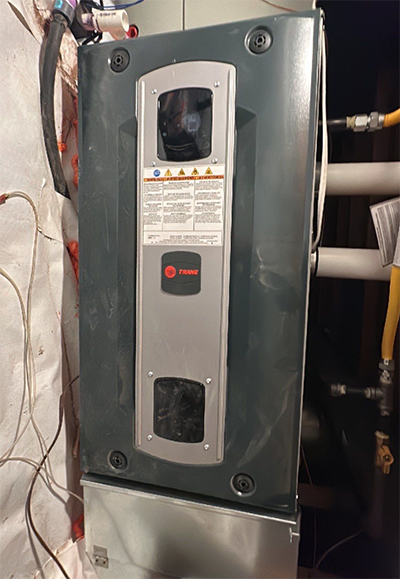 When evaluated against the operational data, the retrofit was a clear success, though certain technical challenges provided valuable insights for future projects. The most significant issue on this project involved the system controls during the first winter season. A control error caused systems to switch to natural gas backup while outdoor temperatures were still within the range for efficient heat pump operation. Once this was identified and corrected, the systems required minimal natural gas backup during the second winter. This highlights that properly configured and functioning controls are essential to achieving the full benefits of an electrification effort.
Aside from control settings, the remaining issues were relatively minor installation errors. In several units, the refrigerant charge was outside the manufacturer’s recommended range, certain refrigerant lines lacked proper insulation, and incorrectly sized filters complicated routine maintenance for staff. Engaging a professional to verify installation quality or perform commissioning is an effective way to ensure proper system operation and longevity following a retrofit.
Project Team
|
Owner |
|
|
Utility Funding Program Partner |
|
|
Energy Engineer |